
Classic Indian Samosas (the easy way)

A samosa is a popular fried or baked pastry with a savory filling, most commonly spiced potatoes, onions, and peas, though meat or cheese fillings are also used. Originating in the Middle East, it became a staple in South Asian cuisine, served as a snack, street food (chaat), or appetizer, often with chutneys like mint or tamarind. The pastry is typically made from all-purpose flour and deep-fried until golden brown, though baking is an alternative.
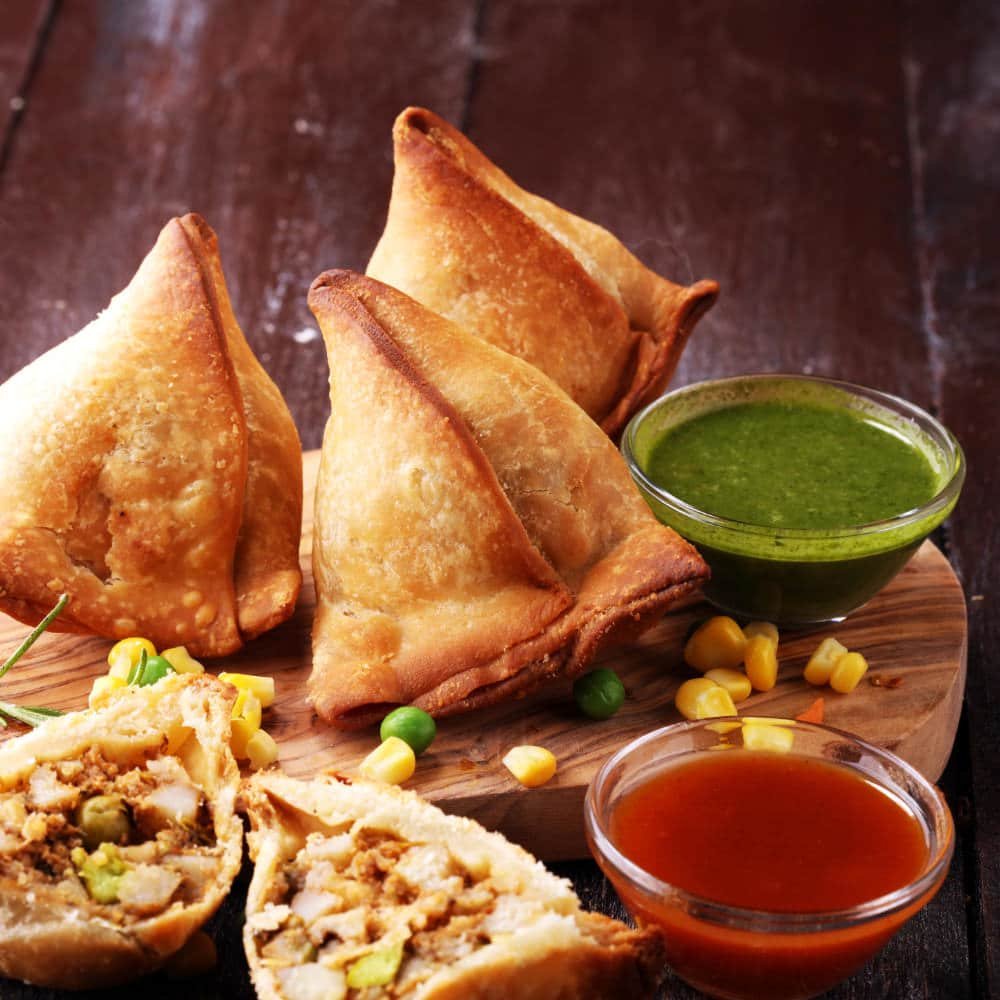
Samosas have a long history, but they’re easy to understand and enjoy. They didn’t actually start in India. Long ago, traders in Central Asia and the Middle East ate a filled pastry called sambusak because it was easy to carry and stayed filling for hours. As traders traveled, the idea spread and eventually reached India hundreds of years ago. In India, cooks made the samosa their own by filling it with spiced potatoes, peas, and warm spices, then frying it until crispy and golden.

What Spices are Used in Samosas?
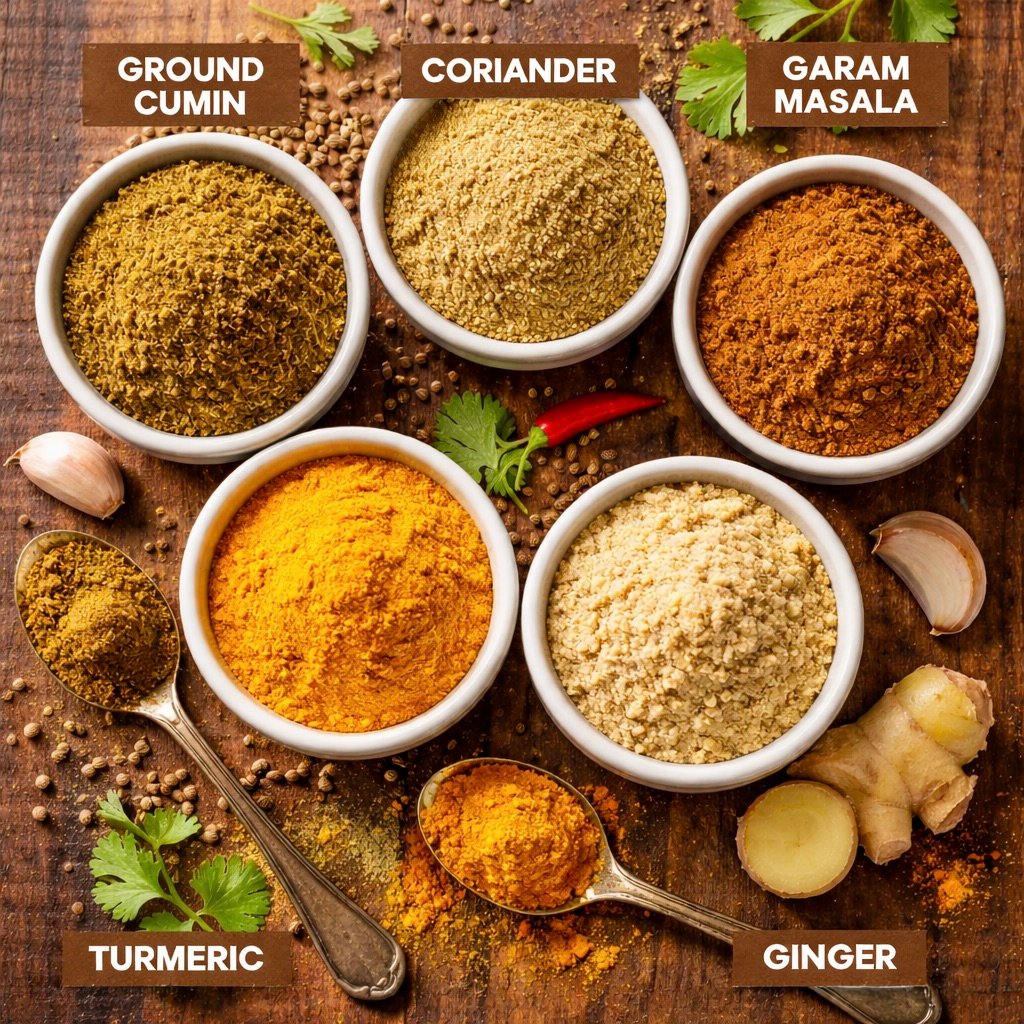
Samosas are flavored with warm, aromatic spices that are surprisingly easy to find and flexible to work with. The most common spices include ground cumin, coriander, garam masala, turmeric, and ginger, which together give samosas their earthy, slightly sweet, and savory depth. Cumin and coriander form the backbone of the filling and are widely available in most grocery stores. Garam masala, a spice blend, adds warmth and complexity, but if you don’t have it on hand, you can substitute a simple mix of cumin, coriander, cinnamon, and a pinch of cloves or nutmeg. Turmeric provides a mild earthiness and golden color, though it can be reduced or omitted if needed. Fresh ginger can be swapped for ground ginger, and green chili or chili powder can be adjusted or replaced with paprika or cayenne depending on your heat preference. One of the best things about samosas is their forgiving nature—using what you already have will still result in a flavorful, satisfying filling.
What Do I Serve With Samosas?
Chutney sauce is one of the simplest ways to add big flavor to food, and it’s much easier to make than most people think. In Indian cooking, chutneys come in many forms, from fresh and herby to sweet and tangy. Green chutney is usually made with cilantro, mint, green chilies, lemon or lime juice, and salt, blended into a bright, fresh sauce in just minutes. Tamarind chutney is darker and richer, made by simmering tamarind with jaggery or sugar and spices for a sweet-sour flavor that pairs perfectly with fried snacks like samosas. There are also coconut chutneys, onion chutneys, tomato chutneys, and spicy chili chutneys, each with its own texture and heat level. Most chutneys require only a handful of ingredients and little to no cooking, and many can be made in a blender in under ten minutes. Once people try making chutney at home, they’re often surprised by how quick, flexible, and forgiving it is—and how much better it tastes fresh.

Popular Chutneys To Serve With Samosas
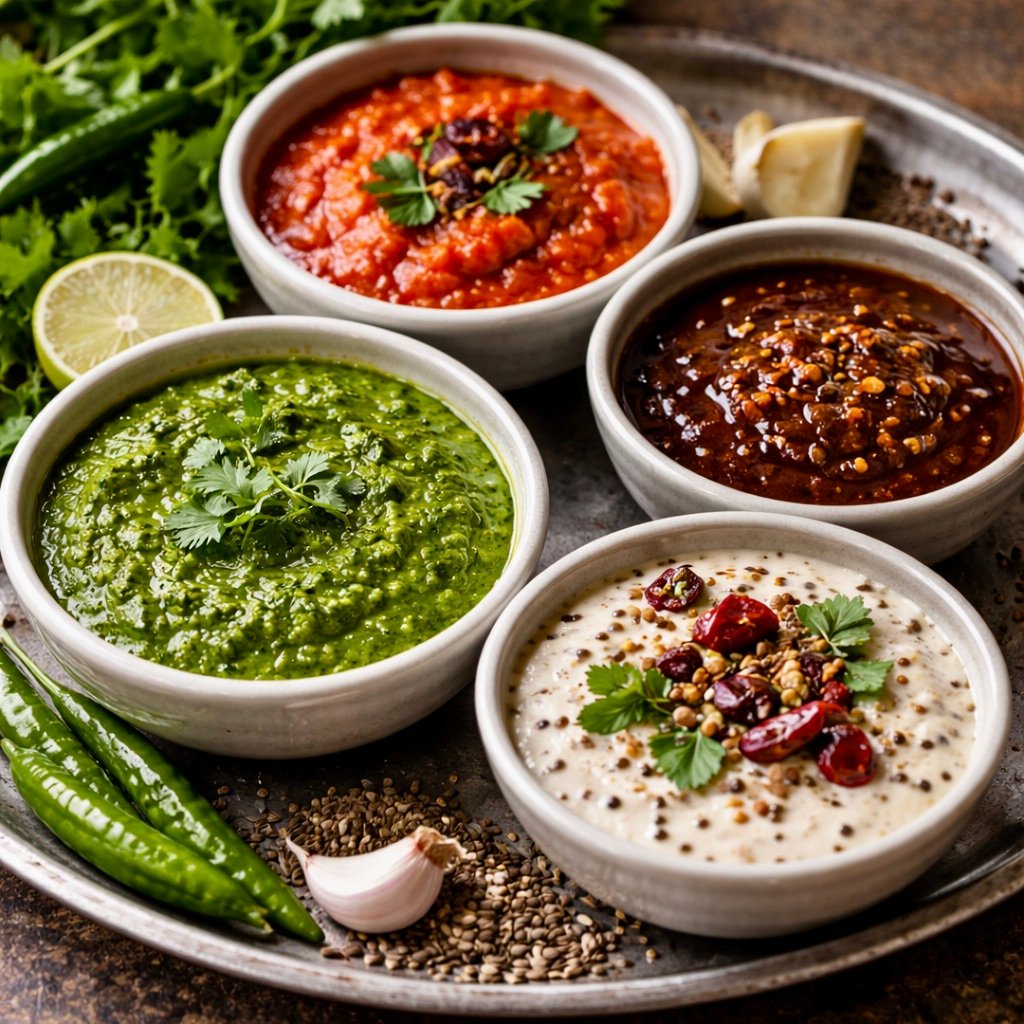
Starting from the top and moving clockwise:
- Tomato Chutney – the bright red, slightly chunky chutney at the top, often made with tomatoes, chilies, garlic, and spices.
- Tamarind Chutney – the dark brown, glossy chutney on the right, sweet and tangy with visible spices and seeds.
- Coconut Chutney – the creamy white chutney at the bottom, typically made with coconut, yogurt or coconut milk, and tempered spices.
- Green Chutney (Cilantro–Mint Chutney) – the vibrant green chutney on the left, fresh and herbaceous with cilantro, mint, green chilies, and lime.
This is a very classic, well-rounded chutney lineup you’d see served with samosas or street snacks.
Samosa Recipe and Chutney Recipes Below

Indian Samosas
Ingredients
- 2 cups boiled potatoes, mashed (not too smooth) Yukon Gold Potatoes are perfect
- 1/2 cup green peas (frozen is fine)
- 1 small onion, finely chopped (optional but tasty)
- 1 tsp cumin seeds you can use powdered cumin instead
- 1 tsp garam masala
- 1/2 tsp ground coriander
- 1/2 tsp turmeric
- 1/2-1 tsp chili powder to taste
- salt to taste
- 1 Tbsp olive oil
- chopped cilantro or green chili optional
- 1 package spring roll or egg roll wrappers easier than making dough from scratch
- Oil for shallow frying, deep frying, or air frying
Instructions
- Gather all the ingredients together
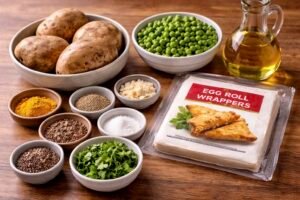
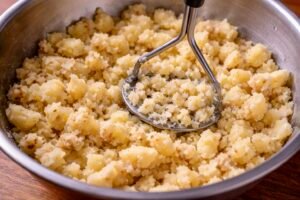
- peel and semi-boil the potatoes until semi soft, let cool and mash them somewhat, but not too smooth, they needs to be somewhat chunky.
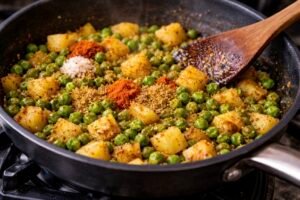
- Heat 1 tbsp oil in a pan. Add cumin seeds; let them sizzle. Add onion (if using) and cook until soft.
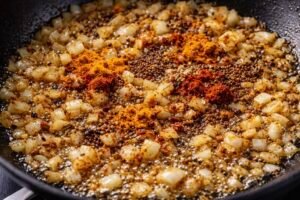
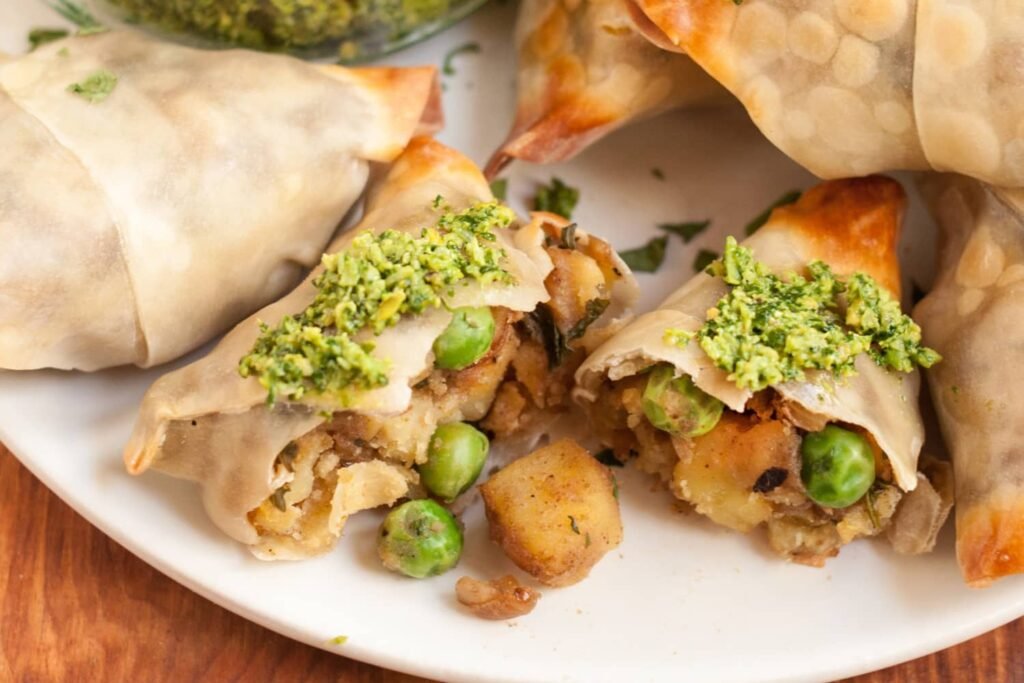
- Stir in the peas, the potatoes, rest of the spices, and salt.Cook 2–3 minutes until fragrant.Take off the heat and let the mixture cool completely.
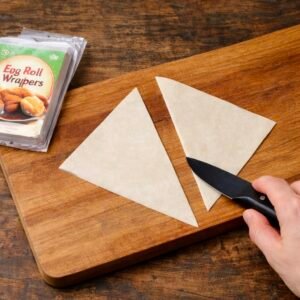
- Cut each Egg roll wrapper into 2 triangles.
- fill the samosas with some filling

- Close the wraps to make a triangle samosa and pinch the edges closed. Fold the edges over and secure with some water, pinching them closed.

- Heat several tablespoons of olive oil or oil of your choice in a frying pan, enough to cover the bottom. Carefully place the samosas in the pan and fry on medium heat turning half way through until they are golden brown on both sides.

- If you want to air fry the samosas you can do that too. Just follow the air fryer instructions. This way is gaining popularity. Brush lightly with oil.Air fry at 375°F (190°C) for 10–12 minutes, flipping once.

- You can also deep fry them if you have a deep fryer. This is the most traditional way to fry them.
How to Deep Fry Samosas
Heat the oil. Pour enough neutral oil (vegetable, canola, or peanut oil) into a deep fryer or heavy pot to fully submerge the samosas. Heat to 350°F (175°C).Test the oil. Drop in a small piece of wrapper—if it bubbles gently and rises slowly, the oil is ready. If it browns too fast, lower the heat slightly.Add the samosas. Carefully lower 6–8 samosas into the hot oil. Do not overcrowd the fryer; fry in batches if needed.Fry until golden. Fry for 4–5 minutes, turning once or twice, until the samosas are evenly golden brown and crisp.Drain. Remove with a slotted spoon or fryer basket and transfer to a plate lined with paper towels to drain excess oil.Cool slightly & serve. Let rest for 2–3 minutes before serving. Enjoy hot with chutney, yogurt sauce, or tamarind sauce.
- Serve with chutneys and enjoy!